
Introduction
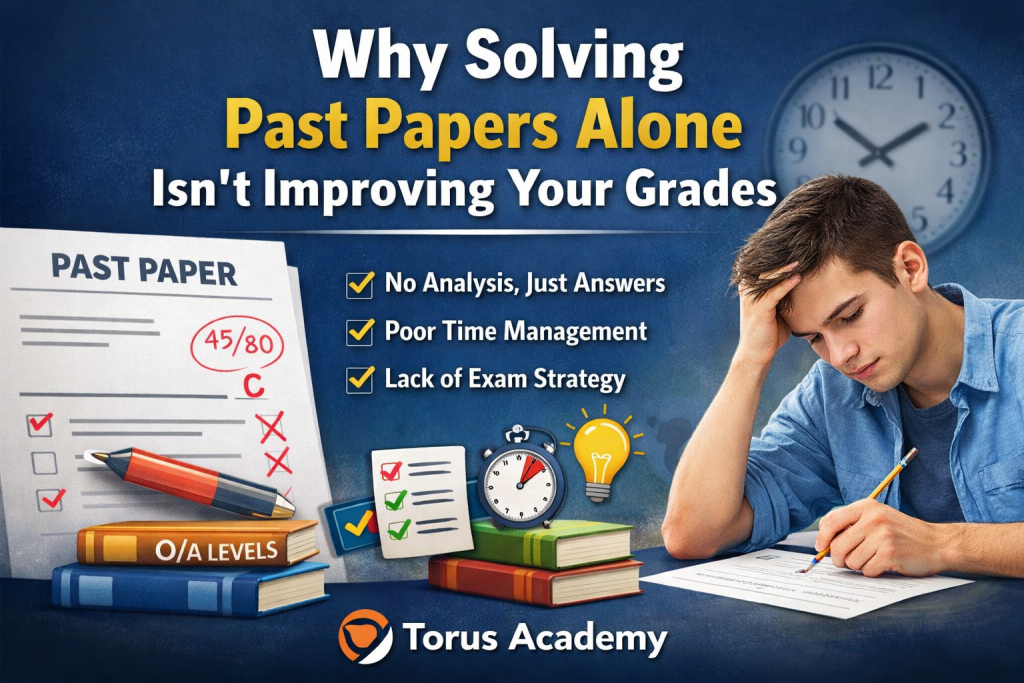
Many O/A Level students diligently solve past papers, hoping it will automatically boost their grades, but often, results don’t reflect their effort. The problem isn’t lack of practice it’s how past papers are used. Simply answering questions and checking answers is revision, not training. Top students approach past papers strategically, focusing on timing, marking schemes, and correcting mistakes immediately. Without this approach, hours of practice can feel wasted. In this article, we explore why solving past papers alone doesn’t improve grades and how to turn them into a powerful training tool.
The Biggest Myth About Past Papers
Many students assume that more past papers automatically mean higher grades. This is a common misconception. Quantity alone doesn’t ensure improvement. When students rush through papers without reviewing mistakes or understanding examiner expectations, repeated practice becomes ineffective. Past papers are tools, not shortcuts. True improvement comes from analyzing answers, identifying weak areas, and practicing strategically. Focusing only on the number of papers solved often creates false confidence. Quality, structured practice always beats mindless repetition.
Common Mistakes Students Make With Past Papers
Many students fail to see progress due to simple yet impactful errors:
- Casual practice: Solving papers without timing or focus on exam conditions
- Ignoring mistakes: Not reviewing lost marks allows errors to repeat
- Neglecting weak areas: Only practicing favorite topics leaves knowledge gaps
- Rote memorization: Memorizing answers reduces adaptability to new questions
- Repeating papers without analysis: Reinforces mistakes instead of correcting them
Avoiding these pitfalls transforms past papers from a revision tool into a real exam focused training system, improving accuracy, speed, and confidence.
Why Solving Past Papers Alone Doesn’t Improve Grades
Solving past papers without strategy often gives a false sense of progress. Students may complete questions but fail to analyze marking schemes or examiner expectations, missing key scoring opportunities. Timing is another issue without simulating real exam conditions, time management suffers during actual exams. Memorizing answers instead of understanding concepts reduces adaptability when questions are worded differently. Past papers are most effective when paired with concept mastery, error correction, and focused revision. True improvement comes from actively training, identifying weaknesses, and refining exam technique.
How to Turn Past Papers into a Training System
To maximize results, treat past papers as a training tool, not just revision:
- Simulate exam conditions: Time each paper to improve speed and pressure management
- Topic wise practice first: Master individual topics before full papers
- Review mistakes carefully: Analyze answers with marking schemes
- Identify patterns: Track frequently tested concepts and repeated question types
- Target weak areas immediately to strengthen knowledge gaps
- Track progress: Monitor speed, accuracy, and confidence over time
This structured approach helps students master concepts, refine exam technique, and build confidence, separating average performers from top O/A Level scorers.
Tips to Maximise Your Past Paper Practice
To get the most out of past papers:
- Practice regularly: Integrate past papers into weekly routines, not just before exams
- Simulate exam conditions: Time yourself strictly to replicate real exam pressure
- Analyze mistakes: Use marking schemes to understand lost marks and correct errors
- Focus on weak areas: Prioritize topics where you struggle most
- Track progress: Maintain a record of scores to monitor improvement and adjust study plans
By approaching past papers as a training system rather than casual revision, students build confidence, improve exam technique, and consistently boost O/A Levels results.
How Torus Academy Supports Effective Past Paper Training
Torus Academy transforms past paper practice into a powerful training system. Experienced teachers guide students in exam focused strategies, including timing, marking analysis, and structured practice. Students follow a weekly program with personalized feedback, ensuring weak areas are addressed. Combining concept clarity with strategic past paper training improves speed, accuracy, and confidence. This approach turns effort into consistent top tier results, empowering students to achieve higher grades and master the O/A Levels exam format.
Actionable Tips to Train Effectively with Past Papers
Follow this structured approach for best results:
- Practice consistently: Don’t wait for exams; integrate past papers weekly
- Simulate real conditions: Use timers and mimic exam pressure
- Analyze mistakes: Correct errors immediately using marking schemes
- Target weak topics: Focus on areas that need improvement
- Track progress: Record scores and adjust your study strategy
These steps turn past papers into a training tool, boosting confidence, exam technique, and O/A Levels performance.
Conclusion
Solving past papers alone isn’t enough to boost O/A Levels grades. Top students know timed practice, detailed analysis, and focused improvement build confidence, speed, and exam mastery. Hard work without direction leads to frustration, but structured past paper training turns effort into results.
Start training with past papers today! Explore Torus Academy’s O/A Levels programs for expert guidance, personalized mentoring, and proven strategies to turn practice into top grades. Don’t just revise train to excel!
FAQs | Everything You Need to Know About Past Papers
1. Are past papers a good way to study?
Yes, past papers are a great study tool but only if used strategically. Timed practice, analyzing marking schemes, and correcting mistakes immediately turns past papers into effective exam training.
2. Are past papers good for revision?
Past papers can be effective for revision when used actively. Simply solving questions isn’t enough; review errors, understand examiner expectations, and focus on weak topics to make revision meaningful.
3. Does doing a past paper count as revision?
Not always. Solving past papers without timing, error analysis, or focus on weak areas is passive revision. To count as real revision, students need to practice strategically.
4. Does marking past papers count as revision?
Marking papers helps identify mistakes and understand scoring, but it only counts as revision if followed by correction, reflection, and focused practice on weak topics.
5. How to use past papers for revision?
Use past papers as a training tool: simulate exam conditions, time yourself, review marking schemes, identify patterns, target weak areas, and track progress.
6. Past papers not improving grades why?
Grades may not improve if students: skip error analysis, memorize answers, ignore weak topics, or practice casually. Structured, exam focused training is the key to improvement.
7. How can I focus 100% on studying?
Eliminate distractions, set clear goals, use timed study sessions, and break tasks into small chunks. Combining focus techniques with past paper training maximizes results.
8. Why am I struggling to get good grades?
Struggling often comes from inefficient study methods, like casual past paper practice, lack of concept mastery, or ignoring exam technique. Structured training and targeted revision improve performance.